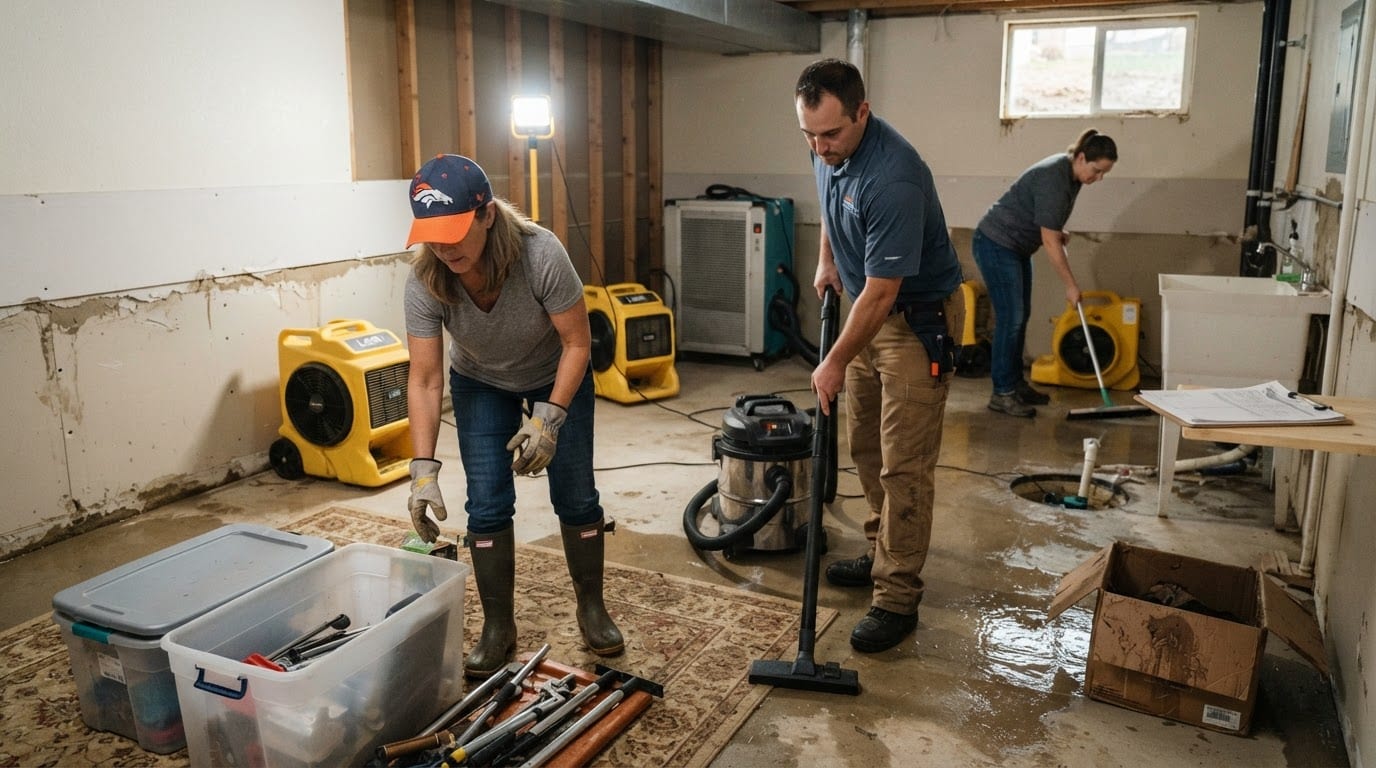
Floodwater rarely stays where it appears. A few inches in a basement can climb into wall cavities, soak insulation, and sit beneath flooring for weeks, while the surface looks almost normal by the weekend. Homeowners who understand how water behaves in a structure tend to make better decisions in the first days, when choices about safety, salvage, and insurance have the greatest effect on the final bill.
Homeowners searching for Flood Cleanup Centennial services are usually facing a situation that feels urgent and confusing at once. The work spans several trades: electrical safety, water extraction, structural drying, mold prevention, and insurance documentation. Knowing the sequence helps you ask better questions of any contractor and avoid expensive missteps, such as tearing out materials that could have been dried or leaving wet drywall in place because it looked fine.
Restoration projects go more smoothly when the first decisions are made calmly and in order. Teams at Restoration Logistics Centennial typically start with life safety, then move to documentation, extraction, and drying, and only then to demolition and rebuilding. The rest of this guide follows that same order.
First 48 Hours: Safety and Stabilizing the Property
The immediate risks are electrical, gas-related, and biological. Before entering any flooded area, shut off electricity at the main breaker only if you can reach it without standing in water. If water reaches outlets, appliances, or the panel, call Xcel Energy to disconnect service at the meter. Electrical current can travel through standing water, and the danger is not limited to visible sparking.
Gas lines require similar caution. If you smell gas, hear hissing, or notice a damaged gas meter or water heater connection, leave the structure immediately and call the gas provider from outside. Do not operate light switches or use open flames inside.
Floodwater should be treated as contaminated. Water that has passed through streets, yards, or sewer lines can carry bacteria, chemicals, and pathogens. Wear waterproof boots, nitrile gloves, and an N95 or better respirator when working in affected areas. Wash exposed skin thoroughly and avoid touching your face.
Leave the structure when the water is still rising, when the ceiling shows sagging or cracking, or when you cannot confirm electrical safety. Once the building is stable and utilities are confirmed off, begin photographing and documenting damage, then move valuables and undamaged items to dry storage. Avoid removing building materials until your insurer has seen the damage.
Sorting Damage: What Can Be Saved and What Has to Go
Water moves through building materials by capillary action, gravity, and vapor diffusion. Porous materials can hold water deep within their structure, so a wall can feel dry on the surface while its interior remains saturated. Moisture also wicks upward into drywall above the visible waterline, which is why professionals often remove material a foot or more above the apparent damage.
Materials That Are Often Salvageable Versus Replaced
Hard, non-porous surfaces such as sealed ceramic tile, glass, metal, and solid-surface countertops can usually be cleaned and disinfected. Porous materials are more difficult to decide on:
- Drywall and plaster absorb water quickly and typically require removal above the waterline.
- Batt and blown-in insulation lose most of their thermal value once saturated and generally must be replaced.
- Carpet pad is almost always discarded, while carpet may be cleaned if the water was clean and drying began quickly.
- Particleboard and MDF swell and lose structural integrity, so subfloor and cabinet components made from them are usually replaced.
- Solid hardwood can sometimes be dried and refinished, but engineered wood and laminate often cup or delaminate.
The source of water changes the decisions. Clean water from a supply line or rainwater that has not contacted contaminants can often be managed with extraction and drying. Gray water, which may include contaminants from appliances, and black water from sewage backup or contaminated floodwater generally require removal of porous materials and professional antimicrobial treatment. Under the IICRC S500 standard for water damage restoration, contamination category determines how aggressively materials must be handled.
Mold Risk and the Timeline That Matters
Mold can begin colonizing saturated organic materials within 24 to 48 hours, and visible growth often appears within several days. The EPA recommends that water-damaged materials be dried within that window whenever possible. Delays increase the scope of work, because growth that spreads into framing, insulation, or HVAC components requires more extensive removal and cleaning.
According to EPA guidance, homeowners may handle small mold areas of about 10 square feet or less, but larger areas, or any growth linked to sewage or HVAC systems, call for a qualified professional. Certifications such as IICRC Applied Microbial Remediation Technician (AMRT) or Water Damage Restoration Technician (WRT) indicate formal training in these procedures.
In the days and weeks after a flood, watch for musty odors, discoloration on baseboards, bubbling paint, warped trim, persistent dampness on concrete, and new allergy-like symptoms among occupants. If any of these appear after drying appears complete, have the area tested before closing walls.
Drying the Structure: Extraction, Airflow, and Moisture Monitoring
Effective drying follows a sequence. First, remove standing water with submersible pumps or truck-mounted extraction equipment. Second, remove saturated materials that cannot be dried in place. Third, set up dehumidifiers, air movers, and, where needed, desiccant units to reduce moisture in the air and materials. Fourth, monitor progress until readings return to a dry standard.
Box fans and open windows alone usually fail for several reasons. They do not lower the humidity of the air, so they can slow evaporation from materials. They cannot reach moisture trapped inside wall cavities, beneath flooring, or within sill plates. Open windows can also introduce humid outdoor air during summer storms, which works against drying.
Drying should be confirmed by measurement rather than appearance. Technicians use pinless and pin-type moisture meters to read material moisture content, along with thermo-hygrometers that report air temperature, relative humidity, and grains per pound (GPP) of moisture in the air. Readings from affected materials are compared against an unaffected reference area, often a dry wall on the same floor, to establish a dry standard. Drying is complete when materials reach that standard and remain there across several days of readings.
Wall cavities, subfloors, and crawl spaces hold moisture long after visible water is gone. Insulation behind drywall, the space beneath a floating floor, and crawl space soil can remain wet for weeks without proper access and airflow. In Front Range homes, where clay-rich soils expand and contract with moisture, crawl spaces and slab edges can also trap water in ways that do not show up in the living area. Drilling small inspection holes or removing baseboard can reveal problems that surface checks miss.
Insurance, Documentation, and Recovering Costs After a Local Flood
Before anything is removed, photograph and video every affected room, including ceilings, wall heights, appliances, and personal property. Capture the waterline on walls, the condition of flooring, and serial numbers for major equipment. Take photos of the water source and any visible damage to foundations or grading. Date-stamped images are the strongest documentation you can provide.
Coverage depends on the source and type of policy. Insurance terms vary, so review your own declarations page, but several categories generally apply:
- Standard homeowner policies typically cover sudden water damage from plumbing failures or appliance leaks, but they usually exclude surface flooding and groundwater seepage.
- Sewer backup endorsements add coverage for water backing up through drains or sewer lines, often at a modest annual premium.
- Separate flood policies, commonly through the National Flood Insurance Program (NFIP) or private carriers, cover overland flooding. NFIP policies generally carry a 30-day waiting period before coverage takes effect, which is why buying early matters.
Keep every receipt for emergency services, equipment rental, temporary lodging, meals, and replacement items. Track mileage and time spent on claim-related tasks if your policy allows reimbursement. Maintain a single file or spreadsheet with dates, names of adjusters, claim numbers, and summaries of each conversation. Ask for written confirmation of any decisions on scope, and request copies of the adjuster’s estimate so you can compare it with contractor pricing.
Reducing Future Flood Damage: Drainage, Pumps, and Grading
Prevention starts outside the house. Grading should slope at least six inches over the first 10 feet away from the foundation, according to common building practice. Downspouts should discharge at least four to six feet from the structure, and extensions help when soils near the foundation are poorly draining. Clear window wells and area drains of leaves and sediment before storm season and after heavy snowmelt, which can overwhelm drainage in spring.
Inside lower-level spaces, a sump pump is a primary defense. Test it by pouring water into the pit every few months, confirm the discharge line is clear and sloped away from the foundation, and replace the unit according to manufacturer guidance, which often falls between seven and ten years. Battery backup systems keep pumps running during power outages, which frequently coincide with storms. Installed battery backups commonly range from several hundred to around $1,000 depending on capacity and whether a water-powered backup is used.
Backwater valves prevent sewage from flowing back into a home through floor drains and fixtures. Installed valves often cost between roughly $500 and $2,000, depending on access and plumbing complexity. Local permitting requirements vary, so check with the City of Centennial building department before any plumbing modification.
Front Range weather adds specific pressures. Intense thunderstorms can overwhelm storm drains quickly, and spring snowmelt can saturate soils that are already frozen at depth, limiting infiltration. Preparing drainage before those seasons, rather than after the first wet basement, is usually the most cost-effective approach available to homeowners.
