Homeowners who use their own wells, water storage systems, and other sources should have a reliable pump to ensure a steady water flow and pressure. The popular ones include the jet pump and pressure tank solution. This combination guarantees efficient water delivery, efficient pump cycling, and system longevity. But prior to the purchase, one should consider various factors that determine performance, stability, and affordability.
Understanding the Pump-Tank Combination
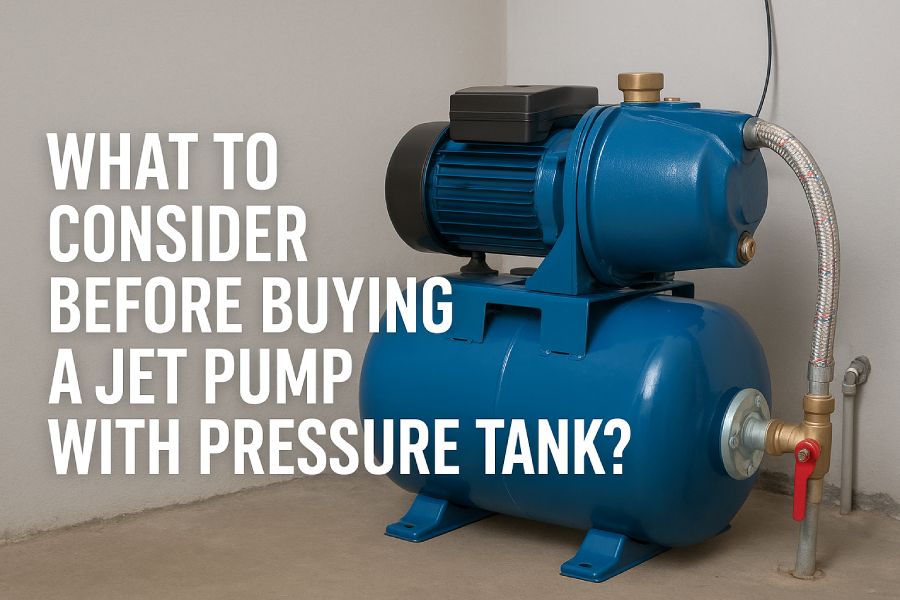
In the case of a jet pump with pressure tank, one should be aware of how the system operates. The jet pump pulls at a reservoir of water, like a well, and forces it into the pressure tank. Pressurized water is then stored in the tank until it is needed by the taps or appliances. This arrangement reduces the on and off cycles of the pumps, wear and energy use.
Supplier Reliability and Brand Reputation
The selection of a supplier is not any less important than the equipment selection. When collaborating with a reputable supplier such as a Canadian water company, buyers are assured of quality products, warranty services, and after sales services. Established suppliers usually have systems that have been found to be durable in the climatic conditions of Canada where water can freeze and the amount of groundwater can vary, thus affecting the performance.
Evaluating Pump Power and Efficiency
Horsepower ratings have a direct impact on the amount of water that a pump can move and at what pressure. More horsepower might be enticing but excessively sizing a horse will waste energy and any plumbing system will be overstrained.
Conversely, weak pumps are not able to keep the flow steady. Find models that have energy efficient motors with a balance between performance and utility costs.
Pressure Tank Capacity and Design
The pressure tank size will dictate the volume of the water that can be available on demand without engaging the pump. The bigger tanks lead to a reduced cycling rate that will decrease the lifespan of the pump and lessen the amount of energy consumed.
Bladder tanks made of modern materials are normally favored because they keep air and water separate, which eliminates maintenance problems such as water logging. Household demand and tank capacity are matched to allow consistent supply at peak periods.
Material Durability and Corrosion Resistance
Given that water is in contact with pumps and tanks at all times, the choice of construction materials is important. Cast iron pumps are stable but can be easily corroded whereas thermoplastic pumps can withstand rusts yet are not strong enough to be used as a heavy duty pump. Tanks that have an epoxy-coated interior lining or those that are made using stainless-steel parts are better designed to protect against corrosion.
Cost vs. Value
Although a consideration of upfront price is important, the total cost of ownership helps in providing an accurate value. Long-term savings would include energy efficiency, durability, warranty coverage, and maintenance ease. It is usually worth spending a little more on a higher quality system that saves you utility bills, need not lose its operations so often and can be trusted to perform on a long-term basis.
Conclusion
The purchase of a jet pump and pressure tank system is your insurance to water availability at home. You can tailor the system to suit your needs by factoring in the pump’s capacity, pump design, supplier’s reputation, the wear resistance of the material used in the tank, and the tank’s maintenance requirements. Not only does a thoughtful approach ensure a consistent water flow but also helps increase the life of your equipment, so it is a good long-term investment.
