Modern engineering demands mechanical systems that move with surgical precision. Every rotating shaft, sliding assembly, and pivoting mechanism requires careful consideration of how components interact under load. The difference between smooth operation and catastrophic failure often lies in the fasteners chosen to control these critical movements. Engineers face the challenge of creating systems that maintain accuracy whilst withstanding tremendous forces and environmental stresses.
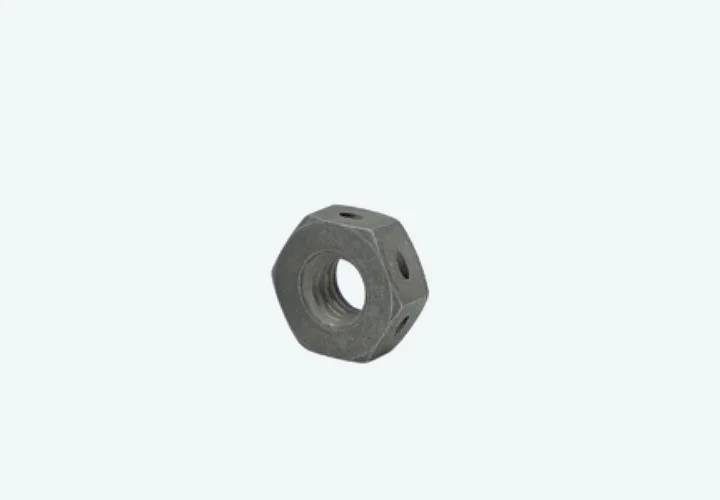
Manufacturing environments place enormous demands on motion control systems, where even microscopic deviations can compromise product quality. NAS509 Jam Nuts serve as the unsung heroes in these applications, preventing loosening under vibration and thermal cycling. These specialised nuts lock against primary nuts, creating a mechanical barrier that maintains preload tension. Their dual-nut configuration ensures that critical adjustments remain stable even when subjected to continuous operational stresses that would defeat conventional single-nut assemblies.
Precision pivoting applications require components that can handle both rotational forces and axial loads without introducing unwanted play. Shoulder bolts excel in these demanding roles, featuring an unthreaded cylindrical section that acts as a precise bearing surface. This design allows components to rotate smoothly around the bolt whilst maintaining exact positioning. The shoulder diameter is manufactured to tight tolerances, creating a reliable pivot point that reduces wear and maintains accuracy throughout countless operational cycles.
Understanding Motion Control Fundamentals
- Load Distribution Principles: Engineering motion control systems begins with understanding how forces transfer through mechanical assemblies. Components must distribute loads evenly to prevent stress concentrations that lead to premature failure. The geometry of fasteners plays a crucial role in this distribution, with threaded portions handling tensile loads whilst bearing surfaces manage shear forces. Proper load distribution extends component life and maintains system accuracy over time.
- Clearance and Tolerance Management: Precision motion requires careful control of clearances between moving parts. Too much clearance introduces backlash and reduces accuracy, whilst insufficient clearance causes binding and excessive wear. Engineers must balance these competing requirements through precise specification of bearing surfaces, shaft diameters, and mounting hole tolerances. The cumulative effect of these tolerances determines overall system performance and reliability.
- Material Considerations for Moving Parts: Different materials exhibit varying wear characteristics and thermal expansion rates. Steel components offer strength and durability but may require lubrication to prevent galling. Brass and bronze provide excellent bearing properties but have lower strength limits. Modern polymer bearings offer self-lubricating properties and chemical resistance. Material selection must consider the operating environment, load requirements, and maintenance accessibility to ensure optimal performance.
Specialised Fastener Technologies
- Shoulder Bolt Design Philosophy: The unthreaded shoulder of these fasteners serves multiple critical functions beyond simple pivoting. This cylindrical section acts as a precise bearing surface with controlled diameter tolerances that maintain consistent clearances. The shoulder length determines axial positioning of components whilst the threaded portion provides clamping force. This dual functionality eliminates the need for separate bearing pins and mounting bolts in many applications.
- Precision Manufacturing Requirements: Achieving the tight tolerances required for motion control fasteners demands advanced manufacturing techniques. Shoulder diameters typically hold tolerances within micrometres to ensure smooth operation without excessive play. Thread pitch and form must be precisely controlled to maintain consistent clamping forces. Surface finishes on bearing areas require careful specification to minimise friction whilst providing adequate wear resistance.
- Heat Treatment and Hardening: Motion control fasteners often require specific hardness profiles to optimise performance. Shoulders may be hardened to resist wear, while threads remain softer for easier installation. Differential heat treatment allows optimisation of each functional area. Case hardening provides a wear-resistant surface while maintaining a tough core that resists shock loads and fatigue.
Preventing Unwanted Movement
- Locking Mechanisms and Methods: Mechanical systems require various approaches to prevent loosening under operational loads. Thread-locking compounds provide chemical resistance to vibration-induced loosening. Mechanical locking washers create spring tension that maintains preload. Castellated nuts with cotter pins offer positive mechanical locking for critical applications. Each method has specific advantages depending on accessibility, maintenance requirements, and operational environment.
- Vibration Resistance Strategies: Industrial environments subject fasteners to complex vibration patterns that can cause loosening through micro-movements. Effective vibration resistance requires understanding the frequency content and amplitude of these disturbances. Some fasteners use prevailing torque features that resist rotation throughout their operational range. Others rely on mechanical interference that prevents relative movement between components.
- Torque Specification and Control: Proper torque application ensures adequate clamping force without overstressing components. Under-torquing allows loosening and reduces joint integrity, whilst over-torquing can cause thread stripping or component distortion. Torque specifications must account for thread condition, lubrication, and material properties. Controlled torque application using calibrated tools ensures consistent results across multiple assemblies.
Application-Specific Design Considerations
- Automotive Motion Control Systems: Vehicle applications demand fasteners that perform reliably across extreme temperature ranges whilst resisting corrosion and vibration. Steering linkages require precise pivot points that maintain accuracy despite road-induced shock loads. Engine components operate in high-temperature environments with continuous vibration that challenges conventional fastening methods. Suspension systems need pivots that accommodate large angular movements whilst maintaining structural integrity.
- Industrial Machinery Applications: Manufacturing equipment requires motion control systems that operate continuously with minimal maintenance. Conveyor systems need pivoting mechanisms that handle repeated loading cycles without developing excessive wear. Assembly line equipment demands precision positioning that remains stable despite thermal cycling and operational vibration. Robotic systems require fasteners that maintain accuracy whilst accommodating high-speed movements and rapid directional changes.
- Aerospace and Precision Requirements: Aircraft applications impose the most stringent requirements for motion control fasteners. Weight restrictions demand optimised designs that maximise strength-to-weight ratios. Environmental conditions include extreme temperatures, pressure changes, and corrosive atmospheres. Safety-critical applications require redundant locking mechanisms and regular inspection intervals. Every component must meet rigorous certification standards that verify performance under extreme conditions.
Installation and Maintenance Best Practices
- Proper Assembly Techniques: Successful motion control systems begin with correct installation procedures that ensure optimal performance from the first operation. Surface preparation removes contamination that could interfere with proper fit and function. Thread engagement must be sufficient to develop full strength without bottoming out in blind holes. Installation torque sequences may require specific patterns to ensure even loading distribution across multiple fasteners.
- Inspection and Monitoring Protocols: Regular inspection identifies developing problems before they cause system failure. Visual checks reveal obvious damage or loosening, whilst more sophisticated techniques detect subtle changes in preload or alignment. Ultrasonic testing can identify internal cracks or stress concentrations. Thermal imaging reveals hot spots that indicate excessive friction or misalignment. Establishing baseline measurements allows tracking of performance changes over time.
- Replacement and Upgrade Strategies: Motion control components have finite service lives that depend on operating conditions and maintenance quality. Replacement decisions must balance cost considerations against reliability requirements. Upgrading to improved fastener designs can enhance performance and extend service intervals. Obsolescence issues may require design modifications to accommodate available components. Planned replacement programmes prevent unexpected failures that disrupt operations.
Performance Optimisation Techniques
- Lubrication and Surface Treatments: Proper lubrication reduces friction and wear whilst preventing corrosion in harsh environments. Different lubricants suit specific applications based on temperature range, load capacity, and chemical compatibility. Surface treatments such as plating or coating provide additional protection against environmental attack. Self-lubricating materials eliminate maintenance requirements in inaccessible locations. The choice between grease and oil lubrication depends on retention requirements and operating conditions.
- Load Analysis and Distribution: Understanding force paths through mechanical assemblies enables optimisation of fastener selection and placement. Finite element analysis reveals stress concentrations that may require design modifications. Load distribution can be improved through careful selection of bearing areas and contact geometries. Dynamic loading considerations include fatigue resistance and shock absorption capabilities. Proper load analysis prevents over-specification that adds unnecessary weight and cost.
- Environmental Protection Measures: Operating environments impose various challenges that affect fastener performance and longevity. Corrosion protection may require special materials or protective coatings. Temperature extremes affect material properties and thermal expansion compatibility. Chemical exposure demands resistant materials and protective barriers. Contamination control prevents particles from interfering with moving surfaces. Environmental sealing maintains lubrication whilst excluding harmful substances.
The following considerations optimise motion control system reliability:
- Material compatibility ensures thermal expansion rates match between mating components
- Surface finish specifications balance friction requirements with manufacturing cost considerations
- Preload verification confirms adequate clamping force without exceeding material limits
- Access planning enables maintenance operations without major disassembly requirements
- Spare parts availability prevents extended downtime during component replacement
Precision motion control represents one of engineering’s most demanding challenges, where the smallest details determine overall system success. The careful selection and application of specialised fasteners such as shoulder bolts and NAS509 Jam Nuts directly impacts operational reliability, maintenance requirements, and long-term performance. These components work together to create mechanical systems that maintain accuracy under the most demanding conditions. Consider consulting with motion control specialists to evaluate your current fastening approaches and identify opportunities for enhanced performance and reliability.
Featured Image Source: https://sp-ao.shortpixel.ai/client/to_auto,q_glossy,ret_img/https://upsind.com/wp-content/uploads/2024/12/jam-nut.jpg
