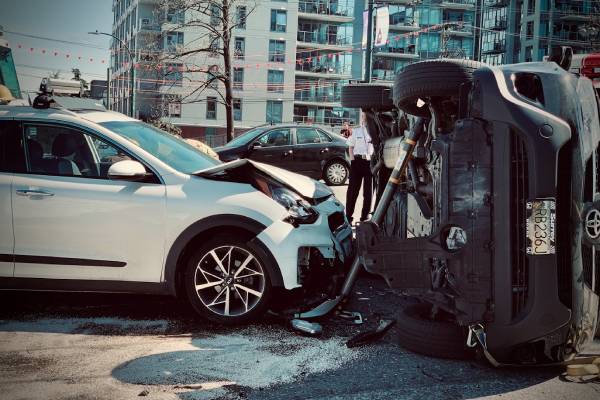
A car accident in Alaska can result in legal and financial problems even if injury doesn’t occur. This means knowing your rights to protect your interests.
Why Understanding No-Injury Auto Accident Claims is Crucial
No-injury auto accidents are more than a minor inconvenience; they have legal obligations and financial consequences. Physical harm isn’t always bad; property damage and emotional tolls are real, too.
Luckily, having a qualified car accident lawyer near me can help deal with insurance adjusters and understand liability laws on these claims.
Your lawyer will protect your rights and give you the best chance of a positive outcome.
Common Types of No-Injury Auto Accidents
In Alaska, rear-end collisions, parking lot incidents, and fender benders at intersections are common accidents. Such incidents usually cause only minor physical injury, but they more commonly cause disputes as to the cause or damage to property.
Because low-speed skids and collisions are common in Alaska, when icy, this adds to the complication of claims from the standpoint of shared negligence.
Typical Settlement Amounts for No-Injury Auto Accidents
Property Damage Claims
Property damage claims value depends on how much it costs to fix or the car’s market value if it is deemed total damage. In Alaska, settlements cover repair, diminished vehicle value, plus, in a few cases, rental car expenses.
Insurance policies’ payout limits generally govern how much is paid, and there may be questions when damages are more than what is covered by a policy.
Emotional Distress Claims
In a car accident, Alaska law allows you to claim for emotional distress, even if there are no physical injuries. For example, an example of a negligent infliction of emotional distress (NIED) arises when the incident produces serious psychological damage.
To prove emotional distress, strong evidence, such as reasonable medical or psychological evaluations, is needed.
Legal Obligations After an Auto Accident
Reporting an Accident to the Police
If property damage exceeds $2,000, Alaska law requires you to report the accident to the police. If you fail, you will face penalties such as fines.
Notifying Insurance Companies
The majority of insurance policies insist you must report accidents immediately. Reporting timely also maximizes smoother claim processing and minimizes the risk of denial of coverage. Alaskan insurers must process claims without undue delay and with good faith.
Statutory Limitations Affecting Your Claim
Time Limits for Filing Claims
In Alaska, the statute of limitations for property damage claims is two years. Failing this deadline could prevent you from obtaining compensation.
Comparative Fault and Its Implications
In Alaska, we follow a pure comparative fault rule, so your settlement amount will be reduced in proportion to your fault. For example, if you’re 20 percent at fault in an accident, your recovery is reduced by that percentage. This rule shows that the greatest compensation can be achieved only when faults are correctly identified.
Recovery Avenues in No-Injury Auto Accidents
Negligent Infliction of Emotional Distress
While it’s relatively rare, you can seek out an NIED claim for emotional distress related to an accident. The courts looked at how psychologically impactful the event was and how many connections there were.
Impact of Insurance Coverage on Compensation
Recovery depends on insurance policies. Liability insurance pays for damages you may cause to another person; comprehensive insurance pays for damages to your car, whether you are at fault or not.
In case you were involved in a car accident and got whiplash or some other neck strain, you need to check with a neck injury attorney, as he can ensure that you are getting complete compensation by evaluating potentially hidden injuries along with property damage claims.
Legal rights and obligations must be carefully noted in the case of no-injury auto accidents. Alaska’s laws protect you from financial losses and legal complications if you know them. Make sure you know what’s going on and, if applicable, ask for legal counsel.
Featured Image Source: https://images.unsplash.com/photo-1713623311317-d3c43a4be4cf?q=80&w=1374&auto=format&fit=crop&ixlib=rb-4.0.3&ixid=M3wxMjA3fDB8MHxwaG90by1wYWdlfHx8fGVufDB8fHx8fA%3D%3D
